Market News
SEA-NOVATION 2026: Can Business Save Nature?
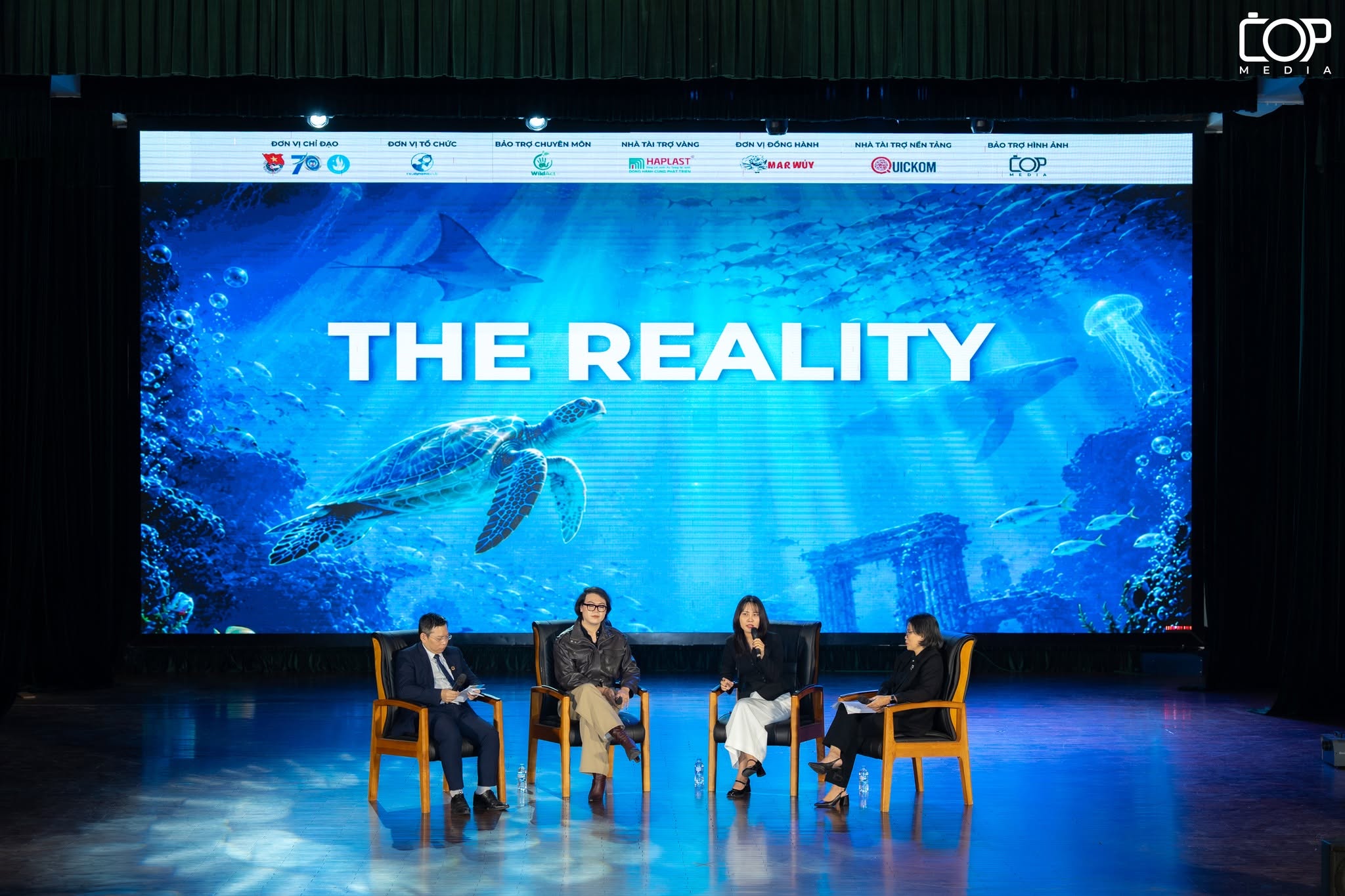
At SEA-NOVATION 2026, Haplast Group and HapBio® Compostable joined the roundtable “Can Business Save Nature?” with one clear message. A company truly contributes to protecting nature when the benefit is built into the products it makes, not only into its corporate social responsibility (CSR) activities. The discussion took place on 12 November 2026 at the National Economics University in Hanoi, where Haplast supported the programme as Gold Sponsor.
Inside the SEA-NOVATION 2026 roundtable
The SEA-NOVATION 2026 roundtable brought business and conservation voices to the same table in front of a student audience. Ms. Luong Thu Nga, Assistant to the Chairwoman of the Board and Head of Organizational Development at Haplast, spoke alongside representatives of IUCN Viet Nam and WildAct.
The format allowed students to hear how a manufacturer and two nature-focused organizations approach the same question from different angles. For Haplast Group, the conversation centred on what a packaging company can change through its products and its supply chain.
alt: Roundtable discussion “Can Business Save Nature?” at SEA-NOVATION 2026, National Economics University Roundtable “Can Business Save Nature?” at SEA-NOVATION 2026, National Economics University, Hanoi.
Where does a bag go after it leaves the factory?
According to Ms. Nga, HAPBIO began with a very simple question. Where does a bag go after it leaves the factory?
That question shaped how the brand selects its materials. HAPBIO chose to start from nature, using renewable feedstocks such as corn, cassava and potato starch and sugarcane bagasse, combined with biodegradable polymers. The exact formulation depends on the product, and each product is developed for a defined end-of-life route rather than a general “green” promise.
You can learn more about the brand’s background on our introduction page and about production on our factory page.
From CSR to sustainable business
The roundtable drew a practical line between two ideas that are often confused. CSR projects matter, but they usually sit outside the core business.
Ms. Nga summarized the difference for the students: “Social responsibility is doing good with profit. Sustainable business is making profit from the good itself.” In other words, the environmental value should come from what the company sells every day, so it grows as the business grows.
What this means for packaging buyers
For importers, retailers and brand owners, this principle has a direct procurement meaning. A sustainable packaging choice should be supported by evidence about how the product is designed to be handled after use.
HAPBIO holds OK compost INDUSTRIAL and OK compost HOME certifications from TÜV AUSTRIA, as well as BPI Certified Compostable. Products certified OK compost INDUSTRIAL are designed to biodegrade in industrial composting facilities, while OK compost HOME applies to home composting conditions. Certification applies to specific materials and products, so buyers should request the certificate covering the exact SKU they are sourcing.
How HAPBIO turns the message into products
HAPBIO is the compostable packaging brand of Haplast Group, backed by the group’s nearly 20 years of manufacturing and export experience. The HAPBIO factory in Hung Yen has a design capacity of 34,000 tons per year.
The HAPBIO product range covers shopping bags, trash bags on rolls, supermarket roll bags, produce bags, food storage bags with zip closures, mailer bags and pet waste bags. Size, thickness, roll format, logo printing and end-of-life instructions can be customized for each project. For another example of HAPBIO working with students, see our article on compostable packaging and buyer trust at IBI 2026.
Key takeaways
- SEA-NOVATION 2026 asked whether business can save nature, and Haplast Group answered by pointing to the product itself.
- HAPBIO starts from the question of where a bag goes after it leaves the factory.
- Environmental claims for packaging should always state the composting condition and the certification behind them.
FAQ
What materials does HAPBIO use?
HAPBIO uses renewable feedstocks such as corn, cassava and potato starch and sugarcane bagasse, combined with biodegradable polymers. The exact formulation depends on the product and its intended application. Buyers can request technical documents and certification records for the specific SKU they are evaluating before placing an order.
Are all HAPBIO products home compostable?
No. HAPBIO holds OK compost INDUSTRIAL and OK compost HOME certifications from TÜV AUSTRIA and BPI Certified Compostable, but each certificate applies to specific materials and products. Industrial composting and home composting are different conditions, so please ask us for the certificate that covers the exact product you plan to source.
Looking for certified compostable packaging?
If your business is looking for compostable packaging with international certification, share your application, specification and destination market with us. Contact HAPBIO to discuss suitable options. Green Solutions from Vietnam to the World.
HAPBIO Green Technology Joint Stock Company Office: 8th floor, Trico Building, 548 Nguyen Van Cu, Long Bien, Hanoi, Vietnam Hotline: (+84) 966 34 66 68 / (+84) 904 953 439 Email: president@haplast.vn | ceo@haplast.vn Website: www.hapbio.com.vn
HAPBIO COMPOSTABLE
📌 Facebook: https://www.facebook.com/profile.php?id=61594644090543
🔗 LinkedIn: https://www.linkedin.com/company/hapbio-official/
🌐 Website: https://hapbio.com.vn/
📩 Email: hapbio@haplastgroup.com
